 Create my account
Software for timber-frame carpenters
Every carpenter,a rock-solid file.
You don’t commit a document, you commit what holds it all up: the structural soundness of the work, presumed yours for ten years. And the risk is delayed, a sag or a collapse shows up years later. Here is the file that keeps what you built, and in what state.
Free to start, no card.
Software shouldn’t just help you run your business. It should strengthen your credibility with the best clients, and protect your interests the day a job gets tense.
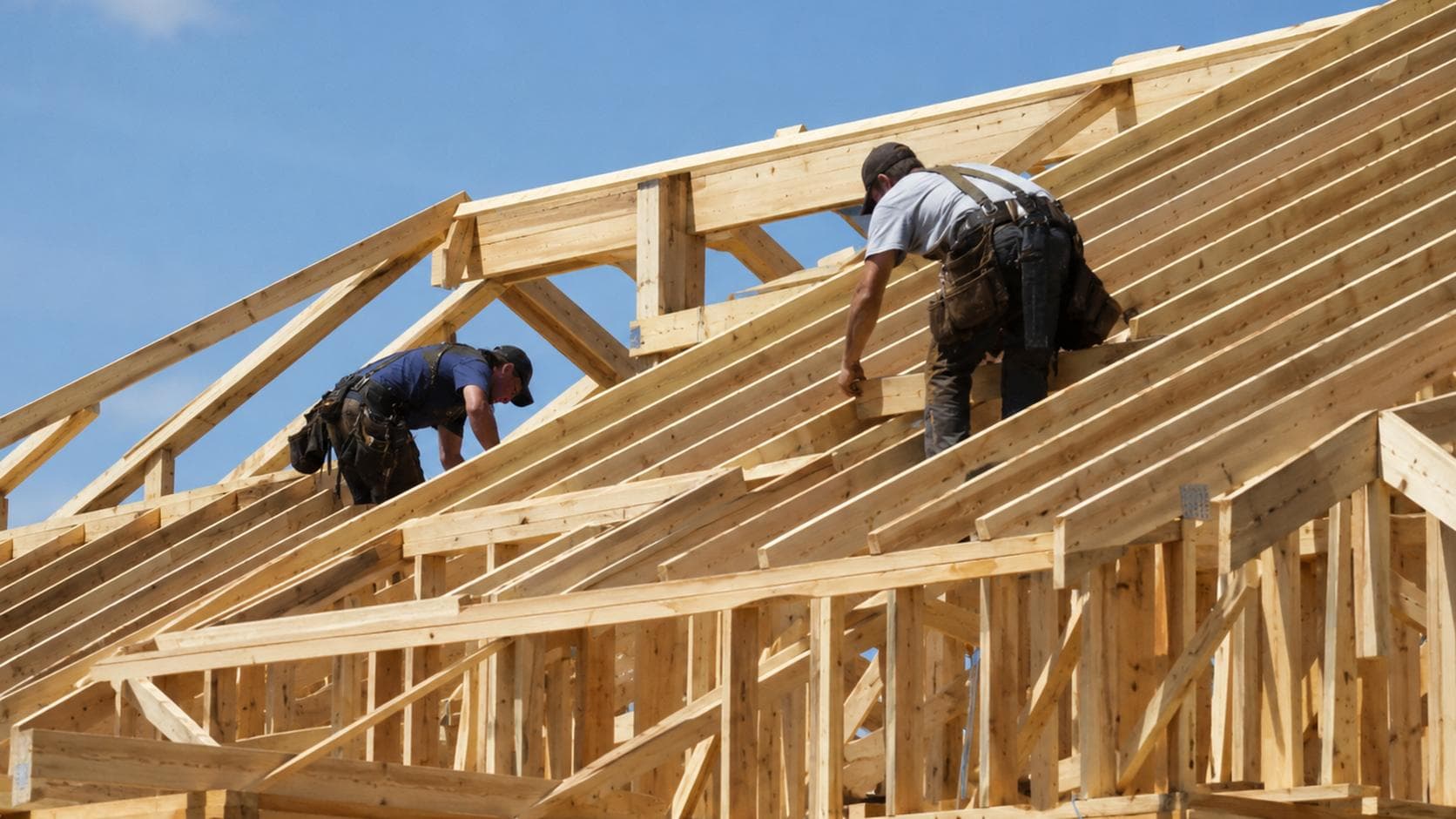
Where a job tips over
In carpentry, the risk isn’t in the quote.
It’s in what holds the building up, and it shows up late, under load. Four moments decide whether your work stands without trouble or ends in an expert report, and they settle in advance, while they’re still a trace in a file.
The sag that appears years later
A dip in the roof, a floor that sags, “waves” on the covering. Invisible at handover, it shows up under snow, long after. And it affects soundness: that’s the decennial liability.
Timber moves: defect, or natural?
Splits, shrinkage, moisture, insects: timber is alive. The line between the material’s natural behaviour and a defect attributable to you is settled on what you can show, starting with the state of the timber at installation.
The calculation no one revisits
Loads, snow, wind, spans, bracing: a sizing error isn’t visible at delivery, it’s paid for years later. Without a trace of your study, it’s hard to defend.
Working on an old frame
On existing work, what was already there isn’t your doing. But you still have to show it: the dated before state and the written advice separate before from after.
None of these moments is fate. Each one becomes harmless the moment it’s traced and dated at the right time.
Trust is won before the first truss.
Trusting someone with their frame, for a client, is trusting what keeps their house standing. He can’t judge your joints once the roof is on, so he judges what he can see: a clear quote, tidy past work, a business you can find again. At a similar price, the carpenter who shows his work and his seriousness comes before the one who’s a number at the bottom of a quote.
Your public page and your projects don’t manufacture that rigour. They make it visible, for the client hesitating to trust you with their structure.
The day the structure is questioned, it’s all already there.
The rigour that wins you the job is the same that covers you when a sag appears. What you built, the state of the timber, the sections, your sizing notes, the before state on existing work, the handover report: gathered and dated, from quote to handover.
On timber frames, more than one carpentry claim in two involves the wood, at an average cost above twelve thousand euros. The day the expert arrives, you don’t open a box of photos: you open the file, and it shows work done by the book.
One single way of working, two benefits: it wins you the job, then it covers you for ten years.
Several jobs, one clear head.
Your jobs, your teams, your hours and your margins sit in one place, up to date. You see whether a job is paying you while it runs, not at the end of the year.
And on the job, everything is captured on the spot: photos, notes, sections, checked points, even offline.
What we get asked
The questions you’re already asking.
How long am I liable for a frame?
Ten years under the decennial liability, from handover. The frame is a structural element: a disorder that compromises the soundness of the work, or makes it unfit for its purpose, falls under decennial liability (art. 1792), and you’re presumed liable, without the client having to prove your fault.
A sag or a collapse, is it necessarily on me?
Not necessarily, but you’re presumed liable, and it’s up to you to show otherwise. Only an external cause clears you: force majeure, the owner’s fault, lack of maintenance. A file showing your sections, your sizing and work done by the book makes the difference when the expert looks for the cause.
Splits in the timber, is that a defect?
Not necessarily: timber is a living material, shrinkage splits are a natural drying phenomenon. The problem is separating what’s natural from what affects the structure. Keeping a record of the state and moisture of the timber at installation is what cuts short the doubt.
I’m working on an old frame, how do I protect myself?
By documenting the before state: dated photos of the existing work before you touch it, the diagnosis, and the written advice. What was already there isn’t your doing, but it’s up to you to be able to show it. Without the before state, it’s your word against the client’s.
Do I have to replace my quoting software?
The quote isn’t the end, it’s the first piece of your file. We start from the quote-contract and hold the thread through to handover and beyond, where your liability really lasts: ten years.
I work alone, is it for me?
Yes. A lone carpenter commits the same structural soundness as a big firm. When no one can vouch for you, your file does.
The common ground
What secures your project doesn't depend on your trade.
The principle is the same across every job you take on: the agreement holds from the quote, the proof files itself as the work goes, the handover closes cleanly. That's what we call a Secure Contract.
See it on a key phase: Handover →
Your next frames deserve a rock-solid file.
You work in another trade? The file holds for all of them →
Free to start, no card.